Venice Beyond the Postcard
Venice has a way of making people feel like they already know it before they arrive. Gondolas, arched bridges, glowing canals, and St. Mark’s Square have appeared in so many photographs that the city can feel familiar from a distance. Yet the most memorable side of Venice often begins after those first famous views.
Beyond the busiest walkways, the city becomes quieter and more atmospheric. The water opens wider, and small islands appear in the distance, each with its own colors, traditions, and rhythm. For travelers who love culture, beauty, and meaningful details, the lagoon reveals a version of Venice that feels more personal than a standard sightseeing route.
The Magic Starts When You Leave the Crowds Behind
Most visitors begin in the historic center, and that makes sense. Venice’s main landmarks are famous for a reason. Still, spending an entire trip in the most crowded areas can make the city feel rushed. The quieter experience begins when travelers step away from packed lanes and look toward the water.
The lagoon changes the pace immediately. Instead of moving through narrow streets, you begin to see Venice as a network of islands, boat routes, reflections, and living traditions. Travelers who want to experience this side of the destination can explore Venice lagoon tours and find routes focused on the islands, waterways, crafts, and local culture surrounding the city.
A lagoon-focused day can include colorful villages, quiet churches, artisan workshops, family-run restaurants, and boat rides that feel cinematic without being overly polished. It gives the trip structure while still leaving room for discovery.
Why the Water Changes Everything
Venice is shaped by water, so seeing it from the water gives travelers a more natural sense of place. From a boat, buildings seem to rise gently from the lagoon. Domes, bell towers, pastel facades, and weathered walls appear in layers, while the light reflects across stone, glass, and painted shutters.
This view brings a sense of space that can be hard to find in the busiest canals. The skyline opens, the noise softens, and small details become easier to notice: laundry moving in the breeze, boats tied along quiet edges, and the warm colors of homes on nearby islands.
That perspective shows Venice as a place of movement, tide, craft, and daily life. Its beauty is not limited to monuments. Much of it comes from the way the city connects through water.
The Islands Tell a Different Story
The islands around Venice each offer a distinct mood. Murano is known for glassmaking, a tradition that has shaped its identity for centuries. Visiting the island gives travelers a chance to see craftsmanship as part of daily culture rather than as a simple souvenir stop.
Burano brings a brighter kind of charm. Its painted houses are joyful and almost storybook-like, but the island also has deep roots in fishing and lacemaking. A walk through Burano can feel colorful and relaxed, with quiet canals, small bridges, and family homes that make the island feel lived-in.
Torcello offers a more reflective atmosphere. It is quieter, greener, and more open, with a sense of age that feels different from central Venice. Sant’Erasmo, Pellestrina, San Francesco del Deserto, and Chioggia add even more variety, from gardens and agriculture to fishing life, spiritual retreat, and seaside simplicity.
Together, these places show that the lagoon is central to Venice’s character.
A Landscape Built on History and Beauty
The relationship between the city and the surrounding water is one of the reasons Venice feels so rare. The lagoon has shaped how people travel, trade, build, eat, and live here. It influences the architecture, the food, the daily routines, and the mood of the region.
The importance of Venice and its lagoon is recognized as part of the area’s cultural and historical significance. That recognition reflects something travelers can feel even without studying the details: Venice makes the most sense when the city and lagoon are viewed together.
This context encourages a more thoughtful way of visiting. Instead of treating Venice as a stage set for photos, travelers can see it as a living landscape where beauty, resilience, tradition, and geography meet.
Where Local Life Still Feels Close
One of the loveliest parts of exploring beyond central Venice is the chance to feel closer to local life. In the busiest tourist zones, it can be hard to imagine the city as a place where people work, shop, gather, and keep traditions alive. On the islands and along quieter routes, that everyday rhythm becomes easier to notice.
You may see fishermen preparing boats, artisans shaping glass, older residents chatting near a canal, or small restaurants setting tables before lunch. These scenes do not need to be dramatic to feel memorable. Their appeal comes from their simplicity.
Glassmaking, lacemaking, boat culture, seafood, gardens, and religious sites all feel connected to the surrounding water. A quiet walk, a slow lunch, a conversation with a maker, or a view across the lagoon can become the moment you remember most.
A Softer Kind of Luxury
Luxury in Venice does not have to mean grand hotels, designer shopping, or a packed itinerary. Sometimes it means having enough space to breathe. It means watching the lagoon change color in the afternoon light, finding a peaceful island path, or enjoying a meal without feeling hurried.
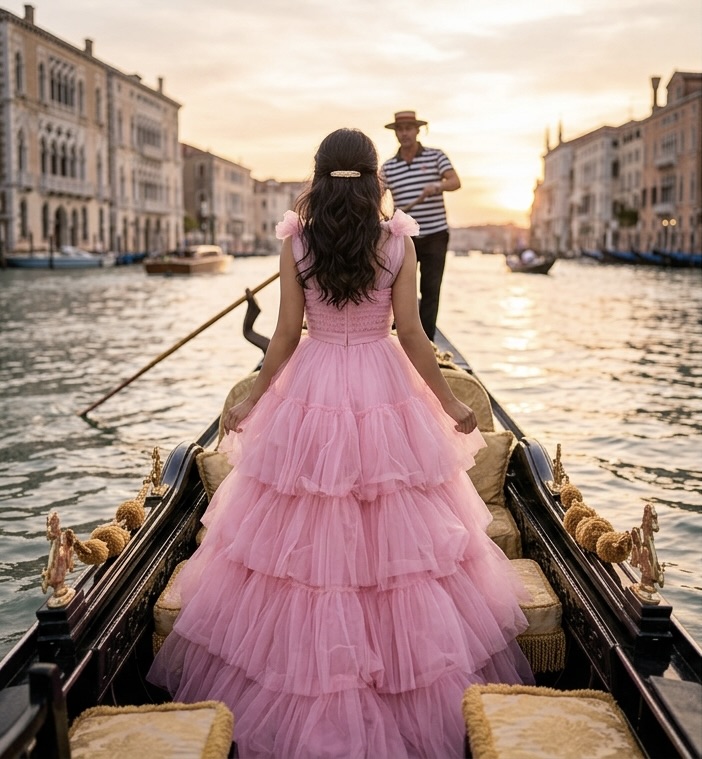
A boat ride at golden hour can feel more special than a crowded viewpoint. A visit to a small artisan studio can feel more personal than a busy shopping street. A quiet island lunch can offer more pleasure than racing between landmarks.
This kind of travel suits people who want beauty without noise. It gives couples time to connect, solo travelers room to reflect, and friends a graceful setting for shared memories.
Perfect for Friends, Couples, and Slow Travelers
A lagoon-focused Venice trip works beautifully for different kinds of travelers. Couples can enjoy the romance of the water and the feeling of discovering hidden corners together. Solo travelers can use the slower pace to explore with more confidence. Families can enjoy the boats, colors, crafts, and open spaces.
It is also a gorgeous idea for a stylish girls’ getaway. Venice has the right mix of beauty, food, conversation, shopping, scenery, and shared discovery. A day spent moving through the lagoon gives friends plenty to enjoy without the pressure of a rigid sightseeing schedule.
The islands create natural moments for connection. There is time to take photos in Burano, browse glass in Murano, share seafood near the water, or sit back on a boat and enjoy the view. The experience feels social without becoming chaotic.
How to Make the Most of This Side of Venice
The best way to enjoy the lagoon is to leave space during the day. Venice can be tempting to overplan because there is so much to see, but this side of the city works better when the schedule has room to breathe.
Starting early can help. Morning light is soft, the air feels calm, and popular islands are often more pleasant before the busiest part of the day. Comfortable shoes are important too, since island visits still involve walking, bridges, uneven paths, and wandering.
It also helps to dress for changing conditions. The breeze on the water can feel cooler than the streets, and the sun can be bright when it reflects off the lagoon. A light layer, sunglasses, and a small bag can make the day easier.
Choose experiences that match the mood you want. Some travelers want art and craftsmanship. Others want food, photography, nature, or quiet history. The lagoon offers all of those possibilities, but the most satisfying trips usually focus on a few meaningful stops rather than trying to see everything at once.
Let Venice Surprise You
Venice becomes more memorable when travelers stop looking only for the scenes they have already seen in pictures. The famous landmarks are worth visiting, but they are only one part of the story. The lagoon adds softness, space, color, and depth.
The islands, boats, traditions, and quiet views create a version of the city that stays with you long after the trip ends. For travelers who want a richer experience, the best choice is simple: slow down, look beyond the busiest paths, and let the water guide the day.